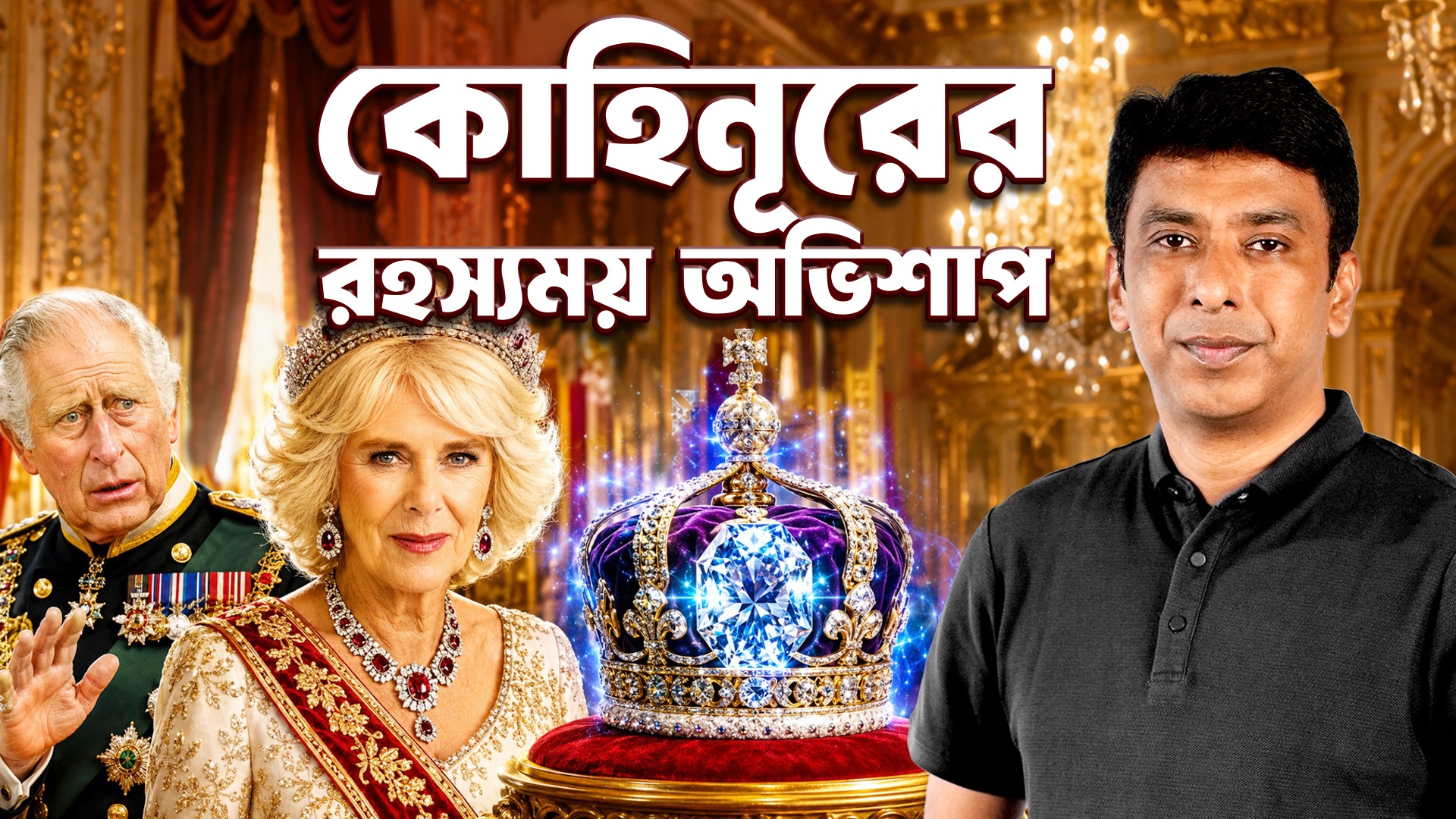
কোহিনূর! পৃথিবীর সবচেয়ে দামী হীরা। আপনারা কি জানেন, এই হীরার সাথে জড়িয়ে আছে সাতশ বছরের এক অভিশপ্ত রহস্য। ভাবতে পারেন, সাতশ বছর ধরে নানান রহস্য কোহিনূরকে ঘিরে রয়েছে। তার চেয়েও আশ্চর্যের বিষয় হলো ভারত থেকে লুট করে নেয়া এই হীরা কেন ব্রিটেনের রাজা চার্লস ছুঁয়ে দেখতে ভয় পান? আর কেনইবা ২০২৩ সালে রানির মুকুটে জায়গা হয়নি বিশ্বখ্যাত এই কোহিনূরের? বলা হয়ে থাকে, এই হীরা যে পুরুষের কাছে যায়, তার জীবন ধ্বংস হয়, শুধু নারীর কাছেই এটি নিরাপদ। এক টুকরো পাথর কি সত্যিই একটি সাম্রাজ্যকে তাসের ঘরের মতো ভেঙে দিতে পারে? এই ভিডিওতে আমরা উন্মোচনের চেষ্টা করবো সেই অভিশপ্ত রহস্য।
শুভেচ্ছা সবাইকে। পৃথিবীর ইতিহাসে এমন কিছু জিনিস আছে, যা দেখলে চোখ ফেরানো যায় না। তাদের মধ্যে অন্যতম এই কোহিনূর। এটা যে শুধু মহামূলবান রত্ন তা নয়, এর ইতিহাসে জড়িয়ে আছে বিশ্বাসঘাতকতা, ক্ষমতার লোভ আর ভয়ংকর সব রক্তমাখা গল্প। আচ্ছা আপনারা কি খেয়াল করেছেন? ২০২৩ সালে যখন রাজা তৃতীয় চার্লসের অভিষেক বা করোনেশন হলো, তখন রানি ক্যামিলা কিন্তু কোহিনূর বসানো সেই বিখ্যাত মুকুটটি পরেননি। সারা বিশ্ব তাকিয়ে ছিল সেই মুকুটের দিকে। কিন্তু কূটনৈতিক বিতর্ক এড়াতে হোক কিংবা লোককাহিনীতে শোনা অভিশাপের ভয়ে; ব্রিটিশ রাজপরিবার ঝুঁকি নেয়নি। কেন জানেন? ১৯ শতক থেকে প্রচলিত একটি জনশ্রুতি বলে, “যে পুরুষ এই রত্ন ধারণ করবে, সে হবে এই পৃথিবীর অধিপতি। কিন্তু তার সঙ্গী হবে পৃথিবীর সমস্ত দুর্ভাগ্য। একমাত্র ঈশ্বর কিংবা কোনো নারীই পারবে এই অভিশাপ থেকে বাঁচতে।”
এবার আসি, কেন ব্রিটিশ রাজারা এইসব কিংবদন্তির কারণে, ভয়ে এই হীরা ছুঁয়েও দেখেন না সেই প্রশ্নের উত্তরে। কোহিনূরকে ঘিরে জড়িয়ে আছে ১০ বছরের এক বাচ্চার করুণ গল্প, যাকে ভয় দেখিয়ে কেড়ে নেওয়া হয়েছিল তার মায়ের কোল আর এই অমূল্য রত্ন। কোহিনূরের গল্পের আসল ট্র্যাজেডি লুকিয়ে আছে এই বিচ্ছেদের কান্নায়।
১৮৪৯ সালের ২৯শে মার্চ। পাঞ্জাবের শিখ সাম্রাজ্যের ভাগ্যাকাশে সেদিন নেমে এসেছিল ঘোর অন্ধকার। ব্রিটিশ ইস্ট ইন্ডিয়া কোম্পানি তখন পাঞ্জাব দখলে নিয়েছে। শিখ রাজা, মহারাজা দুলীপ সিং তখন মাত্র ১০ বছরের শিশু। একটু ভাবুন তো দৃশ্যটা। যে বয়সে একটা বাচ্চার হাতে খেলনা থাকার কথা, সেই বয়সে দুলীপ সিংকে ঘিরে ধরেছে লাল কোট পরা ব্রিটিশ সেনারা। তার সামনে রাখা হলো এক অপমানজনক চুক্তিপত্র- ‘ট্রিটি অফ লাহোর’। তাকে বাধ্য করা হলো সই করতে। আর সেই চুক্তিতেই লেখা ছিল, তাকে তার বাবার সাধের কোহিনূর হীরাটি ইংল্যান্ডের রানির হাতে তুলে দিতে হবে।
কিন্তু ব্রিটিশদের নিষ্ঠুরতা এখানেই থামেনি। তারা জানত, দুলীপ সিং যতদিন তার মা, তেজস্বিনী মহারানি জিন্দ কৌরের সাথে থাকবেন, ততদিন পাঞ্জাবের শিখরা বিদ্রোহ করতে পারে। তাই এক জঘন্য চাল চালল ইংরেজরা। মা জিন্দ কৌরকে টেনে হিঁচড়ে নির্বাসনে পাঠানো হলো, আর ছোট্ট দুলীপকে সম্পূর্ণ একা করে রাখা হলো ব্রিটিশদের পাহারায়।
ব্রিটিশরা আজও কোহিনূরকে বলে ‘উপহার’ বা গিফট। কিন্তু বলুন তো, বন্দুকের নলের মুখে দাঁড়িয়ে, মায়ের থেকে বিচ্ছিন্ন হয়ে, ১০ বছরের একটি এতিম বাচ্চা যখন তার পৈতৃক সম্পত্তি তুলে দেয়- তাকে কি কোনোভাবেই উপহার বলা যায়? ইতিহাসবিদ উইলিয়াম ড্যালরিম্পল (William Dalrymple) এবং গবেষক-লেখক অনিতা আনন্দ (Anita Anand) স্পষ্ট ভাষায় বলেছেন, “কোহিনূর কোনো উপহার নয়, এটি ছিল বন্দুকের নলের মুখে আদায় করা এক জোরপূর্বক দখল।”
দুলীপ সিংকে পরে ইংল্যান্ডে নিয়ে যাওয়া হয়। সেখানে রানি ভিক্টোরিয়া তাকে আদর করতেন ঠিকই, কিন্তু দুলীপ জানতেন তিনি আসলে এক সোনার খাঁচায় বন্দি পাখি। তার জীবনের ট্র্যাজেডি এখানেই শেষ নয়। বড় হয়ে তিনি তার মাকে ফিরে পেয়েছিলেন বটে, কিন্তু তখন বড্ড দেরি হয়ে গেছে। লন্ডনের এক হোটেলে ১৩ বছর পর যখন মা-ছেলের দেখা হয়, তখন মহারানি জিন্দ কৌর প্রায় অন্ধ। তিনি তার ছেলের চুলে হাত বুলিয়ে কেঁদে ফেলেছিলেন, কারণ ব্রিটিশরা দুলীপের লম্বা চুল কেটে তাকে খ্রিস্টান বানিয়ে ফেলেছিল। দুলীপ সিং শেষ জীবনে শিখ ধর্মে ফিরে ভারতের স্বাধীনতা আন্দোলনে সমর্থনও দিয়েছেন। তবে ব্যর্থ হয়েছিলেন ভারতে ফিরে যাবার চেষ্টা করে। জীবনে এমন নানান চড়াই উতড়াই পার করে ১৮৯৩ সালে চরম দারিদ্র্য ও হতাশার মধ্যে প্যারিসে মৃত্যু হয় দুলীপ সিংয়ের।
এবার আসুন দেখি, কোহিনূরের অভিশপ্ত হওয়ার কিংবদন্তীগুলো কীভাবে মিলেছিলো অক্ষরে অক্ষরে। তার আগে কোহিনূরে ইতিহাসটা একটু বলে রাখি। কোহিনূরের জন্ম ভারতের গোলকন্ডা’র খনিতে। যদিও ঠিক কবে এটি প্রথম আবিষ্কৃত হয়, তার কোনো সুনির্দিষ্ট দিনক্ষণ ইতিহাসের পাতায় সংরক্ষিত নেই। সেখান থেকে কাকাতীয় রাজবংশ, তারপর তুঘলক, লোদি হয়ে এটি পৌঁছায় মুঘলদের হাতে। মুঘল সাম্রাজ্যের প্রতিষ্ঠাতা বাবর তার ‘বাবরনামা’-য় লিখেছিলেন, এই হীরার যা দাম, তা দিয়ে সারা পৃথিবীর মানুষকে আড়াই দিন খাওয়ানো সম্ভব!। কিন্তু আগেই বলেছি, যার কাছেই এই হীরা গেছে, তার জীবন তছনছ হয়ে গেছে বলে জনশ্রুতি রয়েছে।
সম্রাট শাহজাহানের কথাই ধরুন। তিনি শখ করে এই হীরাটি তার ময়ূর সিংহাসনে বসিয়েছিলেন। ফলাফল? তার নিজের ছেলে আওরঙ্গজেব তাকে ক্ষমতাচ্যুত করে। জীবনের শেষ দিনগুলো শাহজাহানকে আগ্রা দুর্গের এক ছোট কুঠরিতে বন্দি হয়ে কাটাতে হয়। শোনা যায়, জানালার পাশে রাখা একটি হীরার প্রতিফলনে তাজমহল দেখেই তিনি তার একাকী দিনগুলো পার করতেন। যে সিংহাসনে তিনি কোহিনূর বসিয়েছিলেন, সেই সিংহাসন তার কপালে থাকেনি।
এরপর ১৭৩৯ সাল। পারস্যের নাদির শাহ দিল্লি আক্রমণ করলেন। তিনি দিল্লিকে এমনভাবে লুট করলেন যে, শহরের রাজপথ রক্তে ভেসে গিয়েছিল। একটি জনপ্রিয় কিংবদন্তি আছে—নাদির শাহ নাকি জানতেন না কোহিনূর কোথায়। হারেমের এক নারী তাকে খবর দেন যে, মুঘল সম্রাট মুহাম্মদ শাহ তার পাগড়ির মধ্যে হীরাটি লুকিয়ে রেখেছেন। নাদির শাহ তখন ধূর্তামি করে ‘পাগড়ি বদল’ বা বন্ধুত্বের প্রস্তাব দেন। পাগড়ি খোলার পর হীরাটি মাটিতে পড়ে যায়, আর তার দ্যুতি দেখে নাদির শাহ চিৎকার করে ওঠেন—”কোহ-ই-নূর!” বা “আলোর পাহাড়”। সেই থেকেই হীরাটি কোহিনূর নামে পরিচিতি পায়।
যদিও অনেক ইতিহাসবিদ মনে করেন এটি শুধুই একটি গল্প, আসল হীরাটি ময়ূর সিংহাসনেই ছিল। কিন্তু আসল সত্য হলো, কোহিনূর নাদির শাহকেও ছাড়েনি। ইতিহাস সেটাই বলছে কারণ এই হীরা নেয়ার কিছুদিনের মধ্যেই তিনি পাগল হয়ে যান, তাকে হত্যার ষড়যন্ত্রের সন্দেহে নিজের ছেলেকে অন্ধ করে দেন এবং শেষ পর্যন্ত নিজের দেহরক্ষীদের হাতেই খুন হন।
এরপর এটি আসে আফগান শাসক আহমদ শাহ আবদালির কাছে। এটি পাবার পর তার মুখে পোকা লাগে এবং ভয়ানক যন্ত্রণাদায়ক মৃত্যু হয় তার। তারপর তার নাতি শাহ সুজা, যিনি নিজের ভাইয়ের হাতে অন্ধ হন এবং রাজ্য হারানো ভিখারির মতো পালিয়ে যান ভারতের পাঞ্জাবে।
পাঞ্জাবের মহারাজা রঞ্জিত সিং, যাকে বলা হতো ‘শের-ই-পাঞ্জাব’, তিনি শাহ সুজাকে আশ্রয় দেওয়ার বিনিময়ে কোহিনূর দাবি করেন। শাহ সুজা দিতে চাননি। রঞ্জিত সিং তখন সুজার ছেলেকে চোখের সামনে নির্যাতন করা শুরু করলেন। শেষমেশ ছেলের কষ্ট সইতে না পেরে সুজা হীরাটি দিতে বাধ্য হন। রঞ্জিত সিং হীরাটি পেলেন ঠিকই, কিন্তু শেষ বয়সে তিনি প্যারালাইজড হয়ে পড়েন। আর তার মৃত্যুর পর? মাত্র কয়েক বছরের মধ্যে তার পুরো বংশ ধ্বংস হয়ে যায়। ষড়যন্ত্র, খুন আর রক্তপাতে ভেসে যায় শিখ সাম্রাজ্য।
এতক্ষণে নিশ্চয়ই বুঝতে পারছেন, পুরুষরা যখনই এই হীরা ছুঁয়েছে, তখনই নেমে এসেছে ধ্বংস। ইতিহাস কিন্তু মিথ্যে বলে না। ব্রিটিশরা যখন কোহিনূর দখল করল, তখন কি অভিশাপ তাদের ছেড়ে দিয়েছিল? একদমই না।
১৮৫০ সালে লর্ড ডালহৌসি যখন হীরাটি জাহাজে করে ইংল্যান্ডে পাঠাচ্ছিলেন, তখন এক অদ্ভুত কাণ্ড ঘটে। ‘এইচএমএস মিডিয়া’ নামের সেই জাহাজে হঠাৎ কলেরা মহামারী ছড়িয়ে পড়ে। নাবিকরা একের পর এক মারা যেতে থাকে। শুধু কি তাই সমুদ্রের মাঝখানে জাহাজটি এক ভয়াবহ ঝড়ের কবলে পড়ে। প্রায় ডুবেই যাচ্ছিল জাহাজটি! নাবিকরা তখন বিশ্বাস করতে শুরু করে এই অভিশপ্ত পাথরই তাদের ডুবিয়ে মারবে। যদিও অনেক বাঁধাবিঘ্ন পেরিয়ে শেষ পর্যন্ত তারা ইংল্যান্ডে পৌঁছায়। নাবিকরা ততক্ষণে একটা ব্যাপারে নিশ্চিত, এটা কোনো সাধারণ পাথর নয়। তারা সাথে করে সাক্ষাৎ মৃত্যু বয়ে নিয়ে এসেছে।
আরেকটা মজার ঘটনা বলি। ইংল্যান্ডে পৌঁছানোর আগে হীরাটি জন লরেন্স নামের এক ব্রিটিশ অফিসারের কাছে ছিল। তিনি হীরাটি তার ওয়েস্টকোটের পকেটে রেখে… ভুলে গিয়েছিলেন! ভাবুন একবার, পৃথিবীর সবচেয়ে দামী হীরা একটি পুরনো কোর্টের পকেটে অবহেলায় পড়ে আছে। প্রায় দেড় মাস পর যখন খোঁজ পড়ল, তখন তার চাকর সেটি একটি টিনের বাক্স থেকে বের করে বলল, “সাহেব, আপনি কি ওই কাঁচের টুকরোটার কথা বলছেন?”। ভাবুন তো একবার! একটুর জন্য হয়তো ইতিহাস থেকে হারিয়েই যেত কোহিনূর!
ব্রিটিশ রাজপরিবার কিন্তু এই অভিশাপের কথা জানত। আর তাই তারা বের করল এক দারুন ‘লুপহোল’ বা ফাঁকফোকর। বিষ্ণু পুরাণের প্রাচীন এক বাণীতে বলা ছিল— ‘একমাত্র ঈশ্বর বা নারীরাই এটি নিরাপদে পরতে পারবে।’ এমনকি ১৩০৬ সালে আলাউদ্দিন খলজির মালওয়া বিজয়ের পরও এমন কথা শোনা যেত।
তাই বুদ্ধি করে কোহিনূরকে বসানো হলো রানির মুকুটে। রানি ভিক্টোরিয়া, রানি মেরি, রানি এলিজাবেথ শুধুমাত্র নারীরাই এটি পরেছেন। কোনো পুরুষ রাজা, এমনকি বর্তমান রাজা চার্লসও ভুলেও এই হীরা বসানো মুকুট পরেন না।
কিন্তু কোহিনূরের ওপর ব্রিটিশদের অত্যাচার কম হয়নি। ১৮৫১ সালে লন্ডনে যখন এটি প্রদর্শনীতে রাখা হলো, তখন সাধারণ মানুষ খুব হতাশ হলো। কারণ মুঘল আমলের সেই হীরাটি আধুনিক হীরার মতো অতটা চকচকে ছিল না। ব্রিটিশরা তখন কী করল জানেন? রানি ভিক্টোরিয়ার স্বামী প্রিন্স অ্যালবার্ট হীরাটিকে কেটে ফেলার নির্দেশ দিলেন।
মাত্র ৩৮ দিনের মধ্যে হীরাটি কেটে এর ওজন ১৮৬ ক্যারেট থেকে নামিয়ে আনা হলো প্রায় ১০৬ ক্যারেটে! অর্থাৎ, চকচকে করার নেশায় ব্রিটিশরা এই ঐতিহাসিক হীরার প্রায় ৪০% ওজন এবং ইতিহাসের একটা বড় অংশ—কেটে ফেলে দিল। Royal Collection Trust এবং British Library-এর নথি অনুযায়ী, কোহিনূর বর্তমানে টাওয়ার অফ লন্ডনের জুয়েল হাউসে সংরক্ষিত। তার নিচে লেখা আছে “Symbol of Conquest” যার বাংলা- বিজয়ের প্রতীক। হাজার হাজার পর্যটক প্রতিদিন এটি দেখতে যান। কিন্তু এই হীরা আসলে কিসের প্রতীক?
ব্রিটিশদের কাছে এটি হয়তো তাদের হারিয়ে যাওয়া সাম্রাজ্যের গর্ব। কিন্তু ভারত, পাকিস্তান, আফগানিস্তান, এমনকি ইরানের কাছে এটি লুণ্ঠিত ইতিহাসের এক বেদনাদায়ক স্মৃতি। ভারত সরকার বহুবার এই হীরা ফেরত চেয়েছে। কিন্তু ব্রিটিশ সরকার বারবার বলেছে- না। ডেভিড ক্যামেরন তো বলেই দিয়েছিলেন, সব ফেরত দিলে ব্রিটিশ মিউজিয়াম খালি হয়ে যাবে!
অবশ্য ব্রিটেনের প্রত্যর্পণ প্রক্রিয়াও বেশ জটিল। ব্রিটিশ মিউজিয়াম অ্যাক্ট ১৯৬৩ অনুযায়ী, জাতীয় সংগ্রহশালার জিনিসপত্র ফেরত দেওয়া কঠিন। অন্যদিকে, ভারত ছাড়াও পাকিস্তান, ইরান ও আফগানিস্তানের দাবির ফলে বিষয়টি আন্তর্জাতিক কূটনীতির একটি জটিল সমস্যায় পরিণত হয়েছে। এখন বিশ্ব রাজনীতি বদলাচ্ছে, প্রশ্ন উঠছে- ঔপনিবেশিক আমলে লুঠ করা সম্পদ ফেরত দেওয়ার।
তবে একটা কথা মানতেই হবে। কোহিনূর যেখানেই গেছে, সেখানেই অশান্তি নিয়ে গেছে। যে ব্রিটিশ সাম্রাজ্যে একসময় সূর্য অস্ত যেত না, ১৮৫০ সালে কোহিনূর ইংল্যান্ডে পৌঁছানোর এক শতাব্দীর মধ্যেই সেই বিশাল সাম্রাজ্য তাসের ঘরের মতো একের পর এক ভেঙে পড়েছে। ১৯৪৭ সালে তারা হারায় তাদের সবচেয়ে বড় রত্ন ভারতবর্ষকে। অভিশাপ কি তবে সত্যি? নাকি এটা শুধুই কাকতালীয়? ঐতিহাসিকরা যদিও কাল্পনিক অভিশাপের চেয়ে রাজনৈতিক ও অর্থনৈতিক কারণকেই বেশি দায়ী করেন। তবুও এই কাকতালীয় মিল নিঃসন্দেহে আপনাকে কিংবা আমাকে একটু হলে চিন্তায় ফেলবে, এটা নিশ্চিত।
আপনাদের কী মনে হয়? কোহিনূর কি ভারতে ফিরিয়ে আনা উচিত? নাকি এই অভিশপ্ত হীরা যেখানে আছে, সেখানেই ইতিহাসের শিক্ষা হয়ে বন্দি থাকা ভালো? আপনার মতামত কমেন্টে জানান।
ধন্যবাদ সবাইকে। সুস্থ থাকুন, ভালো থাকুন।
The Cursed Koh-i-Noor
Koh-i-Noor! The most expensive diamond in the world. Did you know that a 700-year-old cursed mystery is intertwined with this diamond? Imagine, for seven hundred years, various mysteries have surrounded the Koh-i-Noor. What is even more surprising is why King Charles of Britain is afraid to touch this diamond looted from India. And why did this world-famous Koh-i-Noor find no place in the Queen’s crown in 2023? It is said that whenever this diamond goes to a man, his life is destroyed; it is safe only with women. Can a single piece of stone truly shatter an empire like a house of cards? In this video, we will attempt to uncover that cursed mystery.
Greetings to everyone. There are some things in the history of the world that you simply cannot look away from. Among them, this Koh-i-Noor is one of the most prominent. It is not just a priceless gem; its history is entangled with betrayal, greed for power, and terrifying stories drenched in blood. Have you noticed? In 2023, during the coronation of King Charles III, Queen Camilla did not wear that famous crown set with the Koh-i-Noor. The whole world was watching that crown. But whether to avoid diplomatic controversy or out of fear of the legend’s curse, the British Royal Family took no risks. Do you know why? A legend prevalent since the 19th century says, “He who owns this diamond will own the world, but will also know all its misfortunes. Only God, or a woman, can wear it with impunity.”
Now, let’s answer the question of why British Kings do not even touch this diamond due to these legends. Surrounding the Koh-i-Noor is the tragic story of a 10-year-old boy, from whom his mother’s lap and this priceless gem were snatched away through fear. The real tragedy of the Koh-i-Noor’s story lies in the tears of this separation.
March 29, 1849. A deep darkness descended upon the fate of the Sikh Empire in Punjab that day. The British East India Company had taken control of Punjab. The Sikh King, Maharaja Duleep Singh, was then only a 10-year-old child. Just imagine the scene. At an age when a child should have toys in his hands, Duleep Singh was surrounded by British soldiers in red coats. An insulting treaty was placed before him—the ‘Treaty of Lahore’. He was forced to sign it. And in that treaty, it was written that he must hand over his father’s beloved Koh-i-Noor diamond to the Queen of England.
But British cruelty did not stop there. They knew that as long as Duleep Singh remained with his mother, the fiery Maharani Jind Kaur, the Sikhs of Punjab might rebel. So, the English played a foul game. Maharani Jind Kaur was dragged away and sent into exile, and little Duleep was kept completely alone under British guard.
The British still call the Koh-i-Noor a “gift.” But tell me, when a 10-year-old orphan, standing at the barrel of a gun and separated from his mother, hands over his ancestral property—can that be called a gift in any way? Historian William Dalrymple and researcher-author Anita Anand have stated in clear terms, “The Koh-i-Noor was not a gift; it was a forced acquisition at the point of a bayonet.”
Duleep Singh was later taken to England. Queen Victoria was fond of him, but Duleep knew he was essentially a bird in a golden cage. The tragedy of his life did not end there. He did eventually reunite with his mother when he grew up, but by then it was far too late. When mother and son met in a London hotel after 13 years, Maharani Jind Kaur was almost blind. She wept as she ran her hands through her son’s hair, because the British had cut Duleep’s long hair and converted him to Christianity. In the later stages of his life, Duleep Singh returned to the Sikh faith and supported the Indian independence movement. However, he failed in his attempt to return to India. After passing through many such ups and downs, Duleep Singh died in 1893 in Paris amidst extreme poverty and despair.
Now let’s see how the legends of the Koh-i-Noor being cursed came true word for word. Before that, let me tell you the history of the Koh-i-Noor. The Koh-i-Noor was born in the mines of Golconda, India. Although exactly when it was first discovered is not recorded in the pages of history. From there, it passed through the Kakatiya dynasty, then Tughlaq, Lodi, and reached the hands of the Mughals. Babur, the founder of the Mughal Empire, wrote in his ‘Baburnama’ that the value of this diamond is such that it could feed the entire world for two and a half days! But as I said before, legend has it that whoever possessed this diamond saw their life torn apart.
Consider Emperor Shah Jahan. He fondly set this diamond into his Peacock Throne. The result? His own son Aurangzeb overthrew him. Shah Jahan had to spend his final days imprisoned in a small chamber of the Agra Fort. It is said that he spent his lonely days looking at the reflection of the Taj Mahal in a diamond placed near the window. The throne in which he set the Koh-i-Noor did not remain his.
Then came 1739. Nader Shah of Persia attacked Delhi. He looted Delhi so ruthlessly that the city’s streets flowed with blood. There is a popular legend—Nader Shah supposedly did not know where the Koh-i-Noor was. A woman from the harem informed him that the Mughal Emperor Muhammad Shah had hidden the diamond inside his turban. Nader Shah then cunningly proposed a ‘turban exchange’ as a sign of friendship. After the turban was removed, the diamond fell to the ground, and seeing its brilliance, Nader Shah shouted—”Koh-i-Noor!” or “Mountain of Light.” Since then, the diamond has been known as the Koh-i-Noor.
Although many historians believe this is just a story and the real diamond was in the Peacock Throne, the real truth is that the Koh-i-Noor did not spare Nader Shah either. History says that shortly after taking this diamond, he went mad, blinded his own son on suspicion of a murder plot, and was eventually murdered by his own bodyguards.
Next, it came to the Afghan ruler Ahmad Shah Abdali. After obtaining it, he suffered from a facial infection (maggots in the nose) and died a terrible, painful death. Then his grandson Shah Shuja, who was blinded by his own brother and fled to Punjab, India, like a state-less beggar.
Maharaja Ranjit Singh of Punjab, known as the ‘Lion of Punjab,’ demanded the Koh-i-Noor in exchange for giving Shah Shuja refuge. Shah Shuja did not want to give it. Ranjit Singh then began to torture Shuja’s son in front of his eyes. Finally, unable to bear his son’s suffering, Shuja was forced to give up the diamond. Ranjit Singh got the diamond, but in his old age, he became paralyzed. And after his death? Within just a few years, his entire lineage was destroyed. The Sikh Empire was washed away in conspiracy, murder, and bloodshed.
By now, you must realize that whenever men have touched this diamond, destruction has followed. History does not lie. When the British seized the Koh-i-Noor, did the curse leave them? Not at all. In 1850, when Lord Dalhousie was sending the diamond to England by ship, a strange thing happened. A cholera epidemic suddenly broke out on that ship, the ‘HMS Medea’. Sailors began to die one after another. Not only that, the ship was caught in a terrifying storm in the middle of the sea. The ship almost sank! The sailors then began to believe that this cursed stone would sink them. Although after many obstacles they finally reached England, the sailors were certain of one thing—this was no ordinary stone. They had carried death itself with them.
Let me tell you another interesting incident. Before reaching England, the diamond was with a British officer named John Lawrence. He put the diamond in his waistcoat pocket… and forgot about it! Just imagine, the most expensive diamond in the world lying neglected in the pocket of an old coat. When it was searched for nearly a month and a half later, his servant took it out of a tin box and asked, “Sahib, are you talking about this piece of glass?” Imagine! The Koh-i-Noor could have been lost from history for a moment’s negligence!
The British Royal Family, however, knew about this curse. And so, they found a clever ‘loophole.’ Ancient words in the Vishnu Purana stated—’Only God or women can wear it safely.’ Even after Alauddin Khalji’s conquest of Malwa in 1306, such things were heard. Therefore, the Koh-i-Noor was strategically placed in the Queen’s crown. Queen Victoria, Queen Mary, Queen Elizabeth—only women have worn it. No male King, not even the current King Charles, wears the crown set with this diamond even by mistake.
But the Koh-i-Noor has suffered much at the hands of the British. In 1851, when it was placed on display in London, the general public was very disappointed. Because the diamond from the Mughal era was not as sparkling as modern diamonds. Do you know what the British did then? Queen Victoria’s husband, Prince Albert, ordered the diamond to be cut. Within just 38 days, the diamond was cut down from 186 carats to approximately 106 carats! In other words, in their obsession with making it sparkle, the British cut away about 40% of this historic diamond’s weight—and a large part of history.
According to records from the Royal Collection Trust and the British Library, the Koh-i-Noor is currently kept in the Jewel House at the Tower of London. Beneath it is written “Symbol of Conquest.” Thousands of tourists go to see it every day. But what is this diamond truly a symbol of?
To the British, it may be the pride of their lost empire. But to India, Pakistan, Afghanistan, and even Iran, it is a painful memory of looted history. The Indian government has requested the return of this diamond many times. But the British government has repeatedly said—no. David Cameron even said that if everything were returned, the British Museum would be empty!
Of course, Britain’s restitution process is also quite complex. According to the British Museum Act 1963, it is difficult to return items from national collections. On the other hand, the claims from Pakistan, Iran, and Afghanistan alongside India have turned the matter into a complex problem of international diplomacy. Now, world politics is changing, and questions are being raised about returning wealth looted during the colonial era.
However, one thing must be admitted. Wherever the Koh-i-Noor has gone, it has brought unrest. The British Empire, where the sun once never set—within a century of the Koh-i-Noor reaching England in 1850, that vast empire collapsed one after another like a house of cards. In 1947, they lost their greatest jewel, India. Is the curse then real? Or is it just a coincidence? Although historians blame political and economic reasons rather than imaginary curses, these coincidental matches will undoubtedly make you or me think a little, that’s for sure.
What do you think? Should the Koh-i-Noor be returned to India? Or is it better for this cursed diamond to remain imprisoned where it is as a lesson of history? Share your opinion in the comments. Thank you everyone. Stay healthy, stay well.
