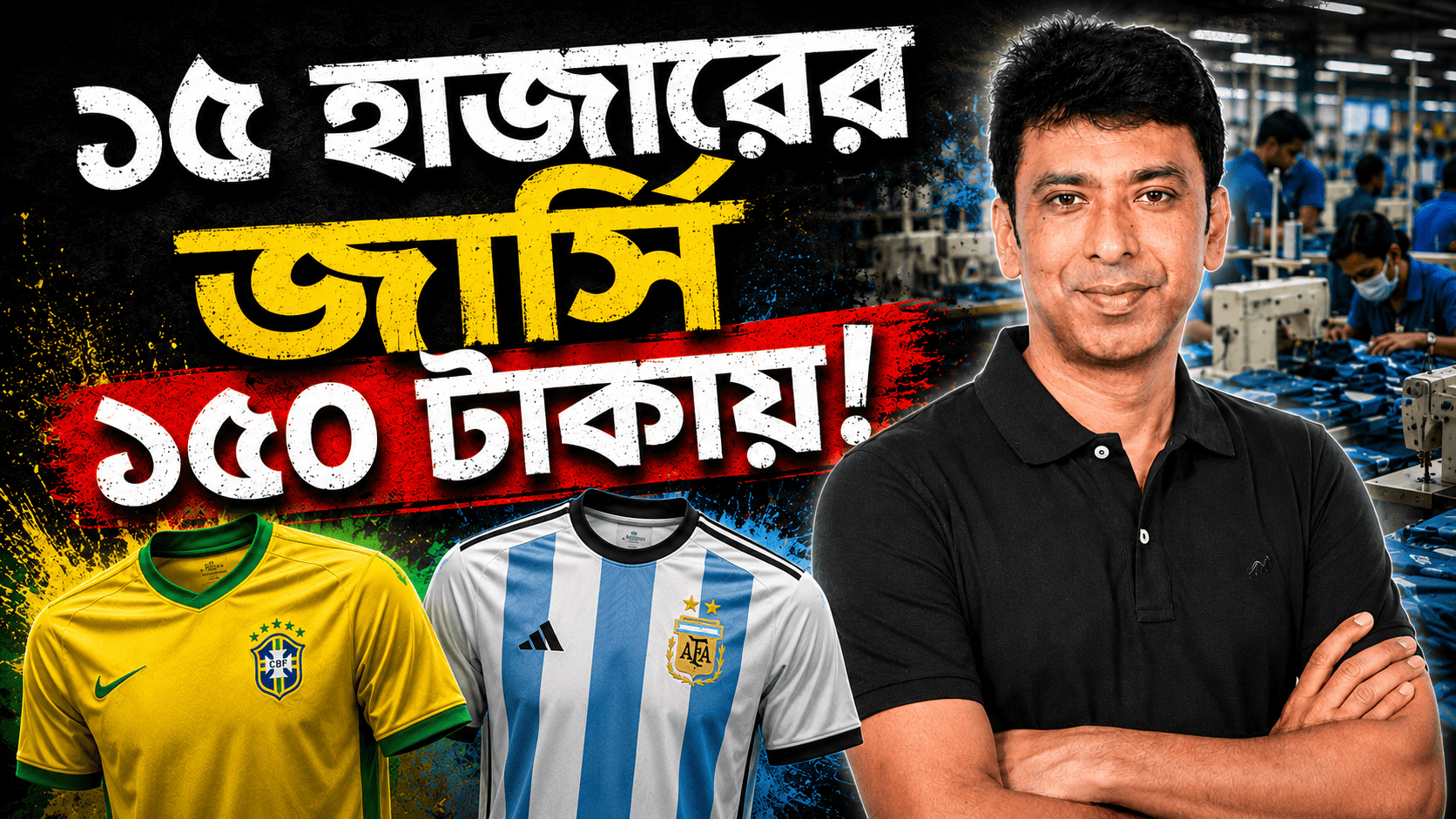
নকল জার্সি ব্যবসা
Fake Jersey Business
২০২২ সালের বিশ্বকাপ ফাইনাল।
The 2022 World Cup final.
লুসাইল স্টেডিয়াম।
Lusail Stadium.
৯০,০০০ দর্শক সামনে, আর পুরো পৃথিবীর প্রায় দেড়শো কোটি মানুষ টিভির সামনে।
90,000 spectators in front, and nearly 1.5 billion people around the world in front of the TV.
মেসির হাতে উঠলো বিশ্বকাপ ট্রফি।
The World Cup trophy was raised in Messi’s hands.
আর সেই রাতেই, আর্জেন্টিনার জার্সির বিক্রি রেকর্ড ভাঙল।
And that very night, sales of Argentina’s jersey broke records.
পুরো বিশ্বকাপে মোট বিক্রি হলো ৩৫ লাখেরও বেশি আর্জেন্টিনার জার্সি।
Throughout the World Cup, a total of more than 35 lakh Argentina jerseys were sold.
কিন্তু আপনি কি জানেন, সেই ৩৫ লাখের বাইরেও আরও কত লাখ জার্সি বিক্রি হয়েছিল?
But do you know how many more lakhs of jerseys were sold beyond those 35 lakhs?
যেগুলোর কোনো হিসাব কোনো ব্র্যান্ডের খাতায় নেই?
Of which no record exists in any brand’s books?
যেগুলো বানানো হয় ঠিক একই মেশিনে, একই কারখানায়- শুধু ভিন্ন সময়ে?
Which are made on the exact same machines, in the exact same factories—just at a different time?
শুভেচ্ছা সবাইকে।
Greetings everyone.
আপনারা কি জানেন, ফুটবল জার্সির বৈশ্বিক বাজার এখন প্রায় ৭.৬ বিলিয়ন ডলারের।
Did you know that the global football jersey market is now worth nearly 7.6 billion dollars?
বাংলাদেশি টাকায় হিসাব করলে সেটা প্রায় ৯০ হাজার কোটি টাকা।
Calculating in Bangladeshi Taka, that is about 90 thousand crore Taka.
শুধু ইউরো ২০২৪-এ অ্যাডিডাস প্রায় ৩০ লাখ জার্সি বিক্রি করেছে।
In Euro 2024 alone, Adidas sold nearly 30 lakh jerseys.
আর প্রতি বিশ্বকাপে জার্সি বিক্রি আগের থেকে ৬০ শতাংশ বেড়ে যায়।
And during every World Cup, jersey sales increase by 60 percent compared to before.
কিন্তু এই বিশাল বাজারের ভেতরে লুকিয়ে আছে আরেকটা বাজার; যার আকার হয়তো কম নয়।
But hidden within this massive market is another market, whose size is perhaps not small.
গবেষকদের হিসাব অনুযায়ী, প্রতি বছর বিশ্বে ৪ থেকে ৬ কোটি নকল জার্সি বিক্রি হয়, যা মোট বিক্রির প্রায় ৩৫ শতাংশ।
According to researchers’ estimates, 4 to 6 crore counterfeit jerseys are sold globally every year, which is about 35 percent of total sales.
অর্থাৎ প্রতি তিনটা জার্সির মধ্যে একটাই হয়তো নকল!
That means one out of every three jerseys might be fake!
২০২৪ সালে ইউরোপের আইনশৃঙ্খলা বাহিনী একটা অভিযানে স্পেন থেকে ১১ টন নকল চ্যাম্পিয়ন্স লিগ ও ইউরোর কিট জব্দ করে।
In 2024, law enforcement agencies in Europe seized 11 tons of counterfeit Champions League and Euro kits from Spain in an operation.
মাত্র এক অভিযানে ৩৬,৫০০টি জার্সি।
In just one operation, 36,500 jerseys.
২০১৯ সালে সাংহাই পুলিশ ৩০,০০০ প্রিমিয়ার লিগ শার্ট জব্দ করে।
In 2019, Shanghai police seized 30,000 Premier League shirts.
তাহলে কারা বানাচ্ছে এগুলো?
So, who is making these?
এবং সবচেয়ে বড় প্রশ্ন- কেন বিলিয়ন ডলারের ব্র্যান্ডগুলো এটা thamaচ্ছে না?
And the biggest question—why aren’t billion-dollar brands stopping this?
গল্পটা শুরু হয় এখান থেকেই!
The story begins right here!
বাংলাদেশসহ চীন, ভিয়েতনাম, কম্বোডিয়া, ইন্দোনেশিয়া কিংবা পাকিস্তানের মতো শীর্ষস্থানীয় পোশাক রপ্তানিকারক দেশগুলোই এখন বিশ্বসেরা ব্র্যান্ডগুলোর বেশিরভাগ পোশাক তৈরি করে।
Top apparel exporting countries like Bangladesh, China, Vietnam, Cambodia, Indonesia, or Pakistan now manufacture most of the garments for the world’s top brands.
এই দেশগুলোর কারখানাতেই নাইকি, অ্যাডিডাস, পুমার মতো বিশ্বের সেরা ব্র্যান্ডের অফিশিয়াল জার্সি তৈরি হয়।
It is in the factories of these countries that the official jerseys of the world’s best brands like Nike, Adidas, and Puma are made.
সকাল ৮টা থেকে রাত ৮টা – এটা অফিশিয়াল শিফট।
8 AM to 8 PM—this is the official shift.
এই সময়ে কারখানায় থাকে বায়ারদের অডিটর, কোয়ালিটি কন্ট্রোলার, আরএফআইডি ট্যাগ ও কাপড়ের প্রতিটি রোলের কঠোর হিসাব।
During this time, there are buyers’ auditors, quality controllers, RFID tags, and a strict accounting of every roll of fabric in the factory.
কিন্তু রাত ১০টার পরে শুরু হয় ভিন্ন গল্প।
But after 10 PM, a different story begins.
গ্লোবাল ম্যানুফ্যাকচারিং ইন্ডাস্ট্রির ভেতরের মানুষরা এর নাম দিয়েছেন ‘ঘোস্ট শিফট’।
Insiders of the global manufacturing industry have named this the ‘Ghost Shift’.
এখানে গুরুত্বপূর্ণ কিছু তথ্য জানা দরকার।
Some important information needs to be known here.
যখন বায়াররা অর্ডার দেয়, তখন কাপড়ের সাথে ৩ থেকে ৮ শতাংশ অতিরিক্ত দেওয়া হয় ‘ওয়েস্টেজ’ বা নষ্ট হওয়ার হিসাব ধরে।
When buyers place orders, 3 to 8 percent extra fabric is provided, accounting for ‘wastage’ or spoilage.
এই অতিরিক্ত কাপড় ধ্বংস করার কথা থাকলেও তা আর হয় না।
Although this extra fabric is supposed to be destroyed, it no longer is.
একই মেশিন, একই দক্ষ শ্রমিক, একই উপকরণ- শুধু ইনভয়েসের খাতাটা আলাদা।
The same machine, the same skilled workers, the same materials—only the invoice ledger is different.
রাত ১০টা থেকে ভোর ৪টার মধ্যে তৈরি হয় অতিরিক্ত ৫ থেকে ২০ শতাংশ জার্সি, যা অফিশিয়াল হিসাবের সম্পূর্ণ বাইরে।
Between 10 PM and 4 AM, an additional 5 to 20 percent of jerseys are produced, which is completely outside the official records.
সহজ কথায়, কাপড়, কারিগর আর কোয়ালিটি একদম আসল নাইকির মতোই, শুধু নাইকির লোগো বা ট্যাগটা থাকে না।
Simply put, the fabric, craftsmanship, and quality are exactly like genuine Nike, just without the Nike logo or tag.
আর এটাই হলো ‘ফার্স্ট কপি’।
And this is what is called a ‘First Copy’.
এখন একটু অংক করি চলেন।
Now let’s do a little math.
এই অঙ্কটা দেখলেই পুরো সিস্টেমটা বোঝা যাবে।
Looking at this calculation will help understand the entire system.
ইউরোপ বা আমেরিকায় একটি অফিশিয়াল চ্যাম্পিয়ন্স লিগ জার্সির রিটেইল দাম ১২০ থেকে ১৫০ ডলার।
The retail price of an official Champions League jersey in Europe or America is 120 to 150 dollars.
বাংলাদেশি টাকায় ১৩ থেকে ১৬ হাজার।
In Bangladeshi Taka, that is 13 to 16 thousand.
এই জার্সিটা তৈরিতে মোট ম্যানুফ্যাকচারিং খরচ কত?
What is the total manufacturing cost to make this jersey?
মাত্র ১০ থেকে ১৭ ডলার।
Just 10 to 17 dollars.
এর মধ্যে কাপড় ও উপকরণ ৫ থেকে ৮ ডলার, কারখানার ওভারহেড ২ থেকে ৪ ডলার, এবং যে শ্রমিক নিজের হাতে সেলাই করলেন, তার পারিশ্রমিক মাত্র ১ থেকে দেড় ডলার।
Out of this, fabric and materials cost 5 to 8 dollars, factory overhead is 2 to 4 dollars, and the worker who stitched it with their own hands receives a wage of just 1 to 1.5 dollars.
বাংলাদেশে এখন গার্মেন্টস শ্রমিকের সর্বনিম্ন মাসিক বেতন ১২,৫০০ টাকা বা প্রায় ১০৫ ডলার।
Currently, the minimum monthly wage for a garment worker in Bangladesh is 12,500 Taka or about 105 dollars.
অর্থাৎ ঘণ্টায় মাত্র ৫৫ পয়সা।
That means only 55 paisa per hour.
তাহলে বাকি ১৩০ ডলার কোথায় যায়?
So where does the remaining 130 dollars go?
শিপিং ও ট্যাক্সে যায় প্রায় ৮-১৫ ডলার।
Around 8–15 dollars go to shipping and taxes.
ব্র্যান্ডের মার্কেটিং, হেডকোয়ার্টার খরচ আর সুপারস্টারদের স্পনসরশিপে যায় আরও ৪৫-৫৫ ডলার।
Another 45–55 dollars go to brand marketing, headquarters expenses, and superstar sponsorships.
আর খুচরা বিক্রেতারা তার মার্জিন রাখে আরও ৩৫-৪৫ ডলার।
And retailers keep another 35–45 dollars as their margin.
শুধু মার্কেটিং আর স্পনসরশিপের খরচটা একটু বোঝার জন্য নাইকি ব্রাজিলের সাথে ১৯৯৬ সালে যে ডিল করেছিল, সেটা ছিল ১০ বছরে ১৬ কোটি ডলারের।
Just to understand the marketing and sponsorship expenses a bit, the deal Nike made with Brazil in 1996 was worth 16 crore dollars over 10 years.
অ্যাডিডাস বায়ার্ন মিউনিখের সাথে ডিল করেছে ১.১ বিলিয়ন ইউরোর।
Adidas made a deal with Bayern Munich for 1.1 billion Euros.
এই স্পনসরশিপের টাকা আসে কোথা থেকে?
Where does this sponsorship money come from?
জ্বি, আপনার-আমার পকেট থেকেই।
Yes, right out of your and my pockets.
তার মানে একটা জার্সির মোট দামের মাত্র ১০-১৫ শতাংশ হলো আসল উপকরণ ও শ্রম; বাকি পুরোটাই ব্র্যান্ডের মূল্য।
This means only 10–15 percent of a jersey’s total price is the actual material and labor; the entire rest is the value of the brand.
এবার আসি ফার্স্ট কপি’ কীভাবে লন্ডনে পৌঁছায়, সেই প্রশ্নের উত্তরে।
Now let’s answer the question of how the ‘First Copy’ reaches London.
ঢাকার নিউমার্কেট বা গুলিস্তানে যে ‘ফার্স্ট কপি’ জার্সি পাওয়া যায়, তার প্রোডাকশন খরচ ৬ থেকে ৯ ডলার।
The production cost of the ‘First Copy’ jerseys found in Dhaka’s New Market or Gulistan is 6 to 9 dollars.
স্থানীয় বাজারে বিক্রি হয় ৮০০ থেকে ১,৮০০ টাকায়।
They sell in the local market for 800 to 1,800 Taka.
ফ্যানদের দৃষ্টিতে হিসাবটা সহজ, আসল জার্সির ৮০-৯০ শতাংশ কোয়ালিটি, মাত্র ১০ শতাংশ দামে।
From the fans’ perspective, the calculation is simple: 80–90 percent of the quality of the original jersey at just 10 percent of the price.
কিন্তু এই জার্সি শুধু ঢাকায় থাকে না।
But these jerseys do not just stay in Dhaka.
লন্ডনে যে অফিশিয়াল জার্সির দাম ৯৫ থেকে ১২০ পাউন্ড, একটি রেপ্লিকা সেখানে হোলসেলে আসে ৮-১২ পাউন্ডে এবং খুচরায় বিক্রি হয় ২০-৩০ পাউন্ডে।
While an official jersey costs 95 to 120 pounds in London, a replica arrives there at wholesale for 8–12 pounds and sells at retail for 20–30 pounds.
কিন্তু কীভাবে?
But how?
কখনও ‘গিফট টেক্সটাইল’ বা ‘স্পোর্টসওয়্যার’ নামে ছোট ছোট পার্সেলে পাঠানো হয়।
Sometimes they are sent in small parcels under the name of ‘Gift Textile’ or ‘Sportswear’.
কাস্টমসের পক্ষে কোটি কোটি পার্সেল খুলে চেক করা প্রায়ই সম্ভব।
It is often possible for customs to open and check crores of parcels.
আবার কখনও দুবাই, সিঙ্গাপুর বা মালয়েশিয়ার মতো ট্রানজিট হাব ব্যবহার করে সাধারণ কার্গোর সাথে মিশিয়ে পাঠানো হয়।
Other times, they are mixed with regular cargo using transit hubs like Dubai, Singapore, or Malaysia.
আর অনলাইনে?
And online?
বিক্রেতারা সাবধানে ‘fake’ শব্দটা এড়িয়ে লেখে “প্লেয়ার এডিশন”, ট্রিপল এ কোয়ালিটি”, “মিরর কোয়ালিটি”, বা “থাই কোয়ালিটি”।
Sellers carefully avoid the word ‘fake’ and write “Player Edition”, “Triple A Quality”, “Mirror Quality”, or “Thai Quality” instead.
৭০ শতাংশ ভোক্তা অনলাইনে নকল পণ্য কিনে ঠকে যান।
70 percent of consumers get cheated buying fake products online.
আসল কথা হলো, ই-কমার্সের বিস্ফোরণ এই বাজারকে আঞ্চলিক থেকে বৈশ্বিক করে দিয়েছে।
The truth is, the explosion of e-commerce has turned this market from regional to global.
নাইকি-অ্যাডিডাস কি সত্যিই এটা বন্ধ করতে চায়?
Do Nike and Adidas really want to stop this?
এখানেই সবচেয়ে জটিল প্রশ্ন।
Here lies the most complex question.
অফিশিয়ালি, নাইকি-অ্যাডিডাস নকল পণ্যের বিরুদ্ধে ‘জিরো টলারেন্স’ নীতির কথা বলে।
Officially, Nike and Adidas speak of a ‘zero tolerance’ policy against counterfeit products.
ইউরোপে নকল স্পোর্টসওয়্যার বছরে ৫০ কোটি ইউরোর ক্ষতি করে।
In Europe, fake sportswear causes a loss of 50 crore Euros annually.
কিন্তু অনঅফিশিয়ালি?
But unofficially?
একটু ভিন্নভাবে ভাবুন।
Think a bit differently.
বিশ্বে ১২০ কোটিরও বেশি ফুটবলপ্রেমী।
There are more than 120 crore football fans in the world.
এদের বড় অংশ এশিয়া, আফ্রিকা, ল্যাটিন আমেরিকায়।
A large portion of them are in Asia, Africa, and Latin America.
এই মানুষগুলোর পক্ষে ১৫০ ডলার দিয়ে জার্সি কেনা সম্ভব না।
It is not possible for these people to buy a jersey for 150 dollars.
কিন্তু তারা জার্সি পরতে চায়, কারণ জার্সি পরাটা ফুটবল কমিউনিটির অংশ হওয়ার ভাষা।
But they want to wear the jersey, because wearing a jersey is the language of becoming part of the football community.
ঢাকার চায়ের দোকান থেকে নাইজেরিয়ার ভিউয়িং সেন্টার; সব জায়গায় যখন এই জার্সিগুলো দেখা যায়, তখন ব্র্যান্ডের লোগোর বিনামূল্যে মার্কেটিং হয়।
From tea stalls in Dhaka to viewing centers in Nigeria; when these jerseys are seen everywhere, it is free marketing for the brand’s logo.
স্পনসররা কোটি কোটি টাকা খরচ করে শুধু লোগো দেখানোর জন্য।
Sponsors spend crores of money just to show the logo.
জার্সি মাদ্রিদের অফিশিয়াল স্টোর থেকে কেনা হোক বা মিরপুরের ফুটপাত থেকে- লোগোটা একই কাজ করে।
Whether the jersey is bought from Madrid’s official store or from the footpath of Mirpur—the logo does the same job.
ব্র্যান্ডগুলো জানে, বেশি কড়াকড়ি করলে গরিব ফ্যানরা দূরে সরে যাবে, ফুটবল তার গ্লোবাল পপুলারিটি হারাবে।
Brands know that if they are too strict, poor fans will drift away, and football will lose its global popularity.
আর একদম ছেড়ে দিলে আসল জার্সির এক্সক্লুসিভিটি নষ্ট হবে।
And if they completely let go, the exclusivity of the original jersey will be ruined.
তাই তারা বজায় রাখে এক অদৃশ্য ব্যালেন্স।
Therefore, they maintain an invisible balance.
এবার একটা কষ্টের হিসেব দেই।
Now let me give a painful calculation.
যে শ্রমিক প্রতিদিন ৬০ থেকে ৮০টি জার্সি সেলাই করেন, তার মাসিক বেতন ১০৫ ডলার বা প্রায় ১২,৫০০ টাকা।
The worker who stitches 60 to 80 jerseys every day has a monthly salary of 105 dollars or about 12,500 Taka.
আর যে জার্সিটা তার হাতে তৈরি, তার দাম ১৫০ ডলার- তার পুরো এক মাসের বেতনের চেয়েও বেশি।
And the jersey made by their hand’s costs 150 dollars—more than their entire month’s salary.
মেসি তার বিশ্বকাপজয়ী জার্সিটা পরে ছয়টা ম্যাচ খেলেছিল।
Messi played six matches wearing his World Cup-winning jersey.
পরে সেটা নিলামে বিক্রি হয়ে ৭৮ লাখ ডলারে!
Later, it was sold at an auction for 78 lakh dollars!
একই মানের কাপড় দিয়ে, একই ধরনের মেশিনে, একজন বাংলাদেশি শ্রমিক বানাচ্ছেন জার্সি; যার মজুরি ঘণ্টায় ৫৫ পয়সা।
With fabric of the same quality, on the same type of machine, a Bangladeshi worker is making a jersey; whose wage is 55 paisa per hour.
একজন ফ্যান হিসেবে আপনি কী করবেন?
What will you do as a fan?
রেপ্লিকা জার্সি কেনা অনেক দেশে বেআইনি।
Buying replica jerseys is illegal in many countries.
এটা ব্র্যান্ডের মেধাস্বত্ব লঙ্ঘন করে।
It violates the intellectual property of the brand.
যে কারখানায় ফেইক জার্সি বানানো হয়, সেখানে শ্রমিক অধিকারের কোনো নিশ্চয়তা নেই।
In factories where fake jerseys are made, there is no guarantee of labor rights.
আর আসল জার্সির বিক্রি কমলে ক্লাবের রাজস্বও কমে।
And if sales of original jerseys decrease, the club’s revenue also falls.
কিন্তু অন্যদিকে, যে দেশে মানুষের মাথাপিছু আয় মাসে ১০০-১৫০ ডলার, সেখানে ১৫০ ডলারের জার্সি কেনার কথা ভাবা বাস্তবসম্মত কি?
But on the other hand, in a country where people’s per capita income is 100–150 dollars a month, is it realistic to think of buying a 150-dollar jersey?
ইউরোপেও, ১৫ থেকে ২৪ বছরের তরুণদের ১৫ শতাংশ নিয়মিত নকল স্পোর্টসপণ্য কেনে শুধু সামর্থ্যের কারণে।
Even in Europe, 15 percent of youth aged 15 to 24 regularly buy fake sports products solely due to affordability.
এটা শুধু একটা জার্সির গল্প নয়, এটা বৈশ্বিক অর্থনৈতিক বৈষম্যের গল্প, যেখানে ফুটবল একটা আয়না।
This is not just the story of a jersey, it is a story of global economic inequality, where football is a mirror.
আপনার কী মনে হয়?
What do you think?
রেপ্লিকা জার্সির বাজার কি ব্র্যান্ডগুলোর সাথে প্রতারণা, নাকি বিনামূল্যে প্রচারণা?
Is the replica jersey market a deception to the brands, or free publicity?
নাকি এটাই সাধারণ মানুষের ফুটবলপ্রেম প্রকাশের একমাত্র পথ?
Or is this the only way for ordinary people to express their love for football?
কমেন্টে জানান।
Let us know in the comments.
আর ভিডিওটা ভালো লাগলে বন্ধুদের সাথে শেয়ার করুন; বিশেষ করে যারা জার্সি নিয়ে বেশি প্যাশনেট!
And if you liked the video, share it with your friends; especially those who are more passionate about jerseys!
ধন্যবাদ সবাইকে।
Thank you everyone.
সুস্থ থাকুন, ভালো থাকুন।
Stay healthy, stay well.
